Professionals who split their time between the office and the airport understand one truth: the bag you carry shapes your entire day. A poorly chosen bag slows you down at security, wrecks your posture on long commutes, and leaves your laptop vulnerable. The right one, by contrast, becomes an invisible productivity tool — organized, secure, and comfortable enough to forget you are wearing it. This guide breaks down the best types of bags for work and travel, with the specifications that actually matter.
Why Bag Selection Deserves Serious Attention
For tech professionals and frequent business travelers, a bag is not an accessory — it is infrastructure. Consider what a single bag must handle on a typical hybrid workday: a 16-inch laptop, a tablet, chargers, a phone, headphones, a water bottle, and possibly a change of clothes for an evening flight. Add a crowded train, a rainstorm, and a three-hour layover, and the requirements become clear.
Three factors separate a professional-grade bag from a consumer one:
- Protection: Padded, suspended laptop compartments that keep devices off the ground.
- Organization: Dedicated pockets that create a fixed home for every item, eliminating the daily scramble.
- Durability: Ballistic nylon, water-resistant zippers, and reinforced stitching rated for years of daily abuse.
The Leading Bag Types Compared
| Backpack | Daily commutes, hybrid work | 20–30L | Weight distribution and hands-free carry |
| Messenger Bag | Office days, client meetings | 12–20L | Quick access and professional appearance |
| Briefcase | Formal settings, executive travel | 10–15L | Polished presentation and structure |
| Rolling Carry-On | Multi-day business trips | 35–45L | Zero shoulder strain, airport efficiency |
| Tote | Light commutes, creative offices | 15–20L | Minimalist profile and easy access |
| Sling | Minimal carry, conferences | 5–10L | Compact agility and fast retrieval |
1. The Professional Laptop Backpack
The backpack remains the undisputed workhorse for commuting professionals, and modern designs have shed the student associations of the past. Look for a streamlined silhouette in black or charcoal nylon, a dedicated suspended laptop sleeve, and a luggage pass-through strap that slides over a carry-on handle.
What to Prioritize
- A padded compartment sized for a 15- to 16-inch laptop with a false bottom.
- Ventilated back panels and ergonomic shoulder straps for long walks.
- Hidden RFID-blocking pockets for passports and cards.
- Water-resistant exteriors rated for sudden downpours.
2. The Structured Messenger Bag
For professionals who move between the office and client sites, the messenger bag strikes a balance between formality and function. A flap closure provides weather protection, while the cross-body strap keeps the bag secure in crowded transit. Choose models with a padded internal sleeve and a quick-access front pocket for phones and transit cards.
Consideration: Messengers distribute weight across one shoulder. If you carry more than 5 kilograms daily, a backpack is the healthier long-term choice.
3. The Modern Briefcase
Briefcases have evolved well beyond rigid leather boxes. Contemporary versions use lightweight nylon or technical fabrics with structured frames, offering a sharp professional look without the weight penalty. They suit formal industries, executive presentations, and any environment where a backpack reads as too casual.
Ideal Features
4. The Rolling Carry-On
For multi-day business travel, a hard-shell or hybrid rolling carry-on is the efficiency standard. Four spinner wheels maneuver through airports with one hand, while a compliant size avoids gate-check fees. Pair it with a personal item backpack for a complete two-bag travel system.
- Hardshell polycarbonate: maximum protection for electronics.
- Soft-sided nylon: flexibility for overpacking and exterior pocket access.
- Checkpoint-friendly designs: laptop sections that fold out independently.
5. The Minimalist Tote and Sling
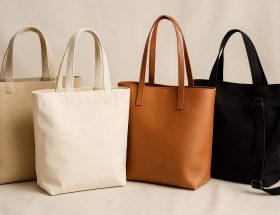
Not every day demands full cargo capacity. A structured tote with an interior laptop sleeve handles light commutes with understated elegance, while a sling bag keeps essentials — phone, wallet, passport, earbuds — within instant reach at conferences and trade shows. These are secondary bags, best used alongside a primary carry system.
Selection Criteria: A Practical Checklist
Final Verdict
There is no single best bag — only the best bag for a specific workflow. The laptop backpack wins for daily hybrid commuting. The messenger bag serves client-facing office days. The briefcase anchors formal settings, and the rolling carry-on dominates multi-day business travel. Invest in two complementary bags — a commuter pack and a travel case — and you will cover every professional scenario with confidence. Choose deliberately, and your bag will quietly support every meeting, flight, and deadline ahead.