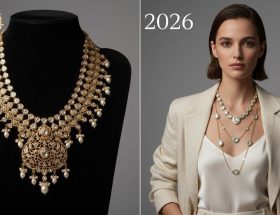
Minimalist jewelry has become a foundational element of modern personal style. Unlike statement pieces that demand attention, minimalist jewelry works quietly, reinforcing an outfit rather than competing with it. For professionals building a daily wardrobe, understanding how to select, layer, and maintain understated pieces is a genuine advantage. This guide outlines practical ideas for integrating minimalist jewelry into everyday outfits, with attention to materials, proportions, and long-term value.
Why Minimalist Jewelry Works for Daily Wear
Minimalist jewelry earns its place in a daily rotation for three reasons: versatility, durability, and visual restraint. A single well-chosen piece can move from a morning meeting to an evening dinner without adjustment. Because these pieces rely on clean geometry rather than trend-driven detailing, they remain relevant across seasons. From a styling standpoint, restraint creates focus. When jewelry does not compete with an outfit, the overall look reads as intentional and composed.
There is also a practical dimension. Fewer, better pieces mean faster decisions in the morning and less maintenance over time. For anyone optimizing a wardrobe for efficiency, this is a meaningful benefit.
Core Pieces to Build Around
A functional minimalist collection typically rests on a small number of categories. The table below outlines a starting framework.
| Earrings | Small hoops, flat studs, thin huggies | Daily office wear, casual weekends |
| Necklace | Fine chain with a single small pendant | Layering or worn alone |
| Bracelet | Slim bangle or fine chain | Subtle wrist interest |
| Ring | Plain band or single-stone design | Everyday signature piece |
Start with one piece from each category in a single metal tone. Consistency across tones is what makes a minimalist collection feel deliberate rather than accidental.
Styling Ideas by Outfit Type
Business and Office Attire
Pair small gold or silver huggies with a fine pendant necklace worn inside a collared shirt. The effect is polished without drawing attention away from tailoring. Avoid bracelets that clink against a desk or keyboard; a slim bangle worn on the non-dominant wrist solves this.
Smart-Casual and Weekend Looks
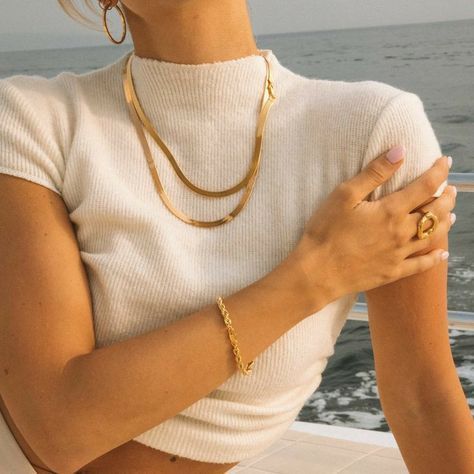
Layer two fine chains at different lengths, keeping the difference between them to roughly two to three centimeters. Add a single flat stud per ear. This combination works with knitwear, denim, and simple shirting alike.
Evening and Transitional Settings
Stack two or three thin rings on one hand and keep the rest of the jewelry unchanged. The principle is to add volume in one area only. Minimalism does not mean absence; it means controlled emphasis.
Layering Rules That Hold Up
Layering is where minimalist jewelry most often goes wrong. The following principles keep a layered look clean:
- Vary length, not weight. Keep chain thickness consistent and adjust only the drop length.
- Limit the total count. Three visible pieces is a reliable ceiling for daytime wear.
- Match metal tone within a single look. Mixed metals can work, but require deliberate proportion.
- Anchor with one focal point. Let a single pendant or ring carry the visual weight.
Materials and Long-Term Value
Minimalist design exposes material quality. There is nowhere for a poor finish to hide on a plain band or a fine chain. Prioritize solid metals over plated alternatives where budget allows, and verify clasp construction on necklaces and bracelets. For daily wear, 14-karat gold and surgical-grade stainless steel offer a strong balance of durability and cost.
Care habits matter equally. Store pieces separately to prevent scratching, remove jewelry before swimming or applying skincare products, and clean fine chains periodically with a soft cloth. Well-maintained minimalist pieces can remain in rotation for years.
A Simple Starting Checklist
Conclusion
Minimalist jewelry is less about owning less and more about choosing precisely. The goal is a small set of pieces that work with everything you already wear. By focusing on clean forms, consistent metal tones, and disciplined layering, everyday outfits gain polish without added complexity. For professionals who value efficiency and coherence in their wardrobe, that is a durable advantage.