The jewelry industry is entering one of its most dynamic periods in decades. As we move through 2026, designers, retailers, and consumers are converging around a set of trends that blend technological innovation with a renewed appreciation for craftsmanship and personal expression. For brands operating in the tech-enabled jewelry space, understanding these shifts is no longer optional—it is essential for staying competitive. This article breaks down the top jewelry trends to follow in 2026, with a focus on the technologies and consumer behaviors reshaping the market.
1. AI-Driven Personalization Becomes the Standard
Personalization is not a new concept in jewelry, but in 2026 it has reached an entirely new level of sophistication. Artificial intelligence now powers everything from custom ring design tools to predictive styling recommendations. Consumers can input their preferences, upload inspiration images, or even share a mood board, and AI algorithms generate tailored designs within minutes.
Leading jewelry tech platforms are integrating machine learning into their e-commerce experiences, offering virtual try-ons that adapt to a customer’s skin tone, hand shape, and personal style history. According to industry analysts, brands that have invested in AI personalization report significantly higher conversion rates and reduced return rates.
- AI-powered design configurators that let customers co-create pieces in real time.
- Predictive styling engines that recommend pieces based on purchase history and browsing behavior.
- Virtual try-on tools enhanced by computer vision and augmented reality.
2. Lab-Grown Diamonds and Traceable Gemstones
Sustainability continues to dominate consumer priorities, and 2026 is the year lab-grown diamonds move from niche alternative to mainstream expectation. Blockchain-backed traceability is now a key differentiator, allowing buyers to verify the origin, carbon footprint, and ethical sourcing of every stone.
Major luxury houses and emerging direct-to-consumer brands alike are embedding digital certificates into their products. QR codes and NFC chips linked to blockchain records give consumers instant access to a gemstone’s full journey—from mine or lab to finished piece. This transparency is no longer a marketing bonus; it is a baseline requirement for credibility.
Key Technologies Behind the Shift
3. Smart Jewelry and Wearable Integration
Smart jewelry is shedding its early “fitness tracker” aesthetic and maturing into elegant, fashion-forward accessories. In 2026, consumers expect their jewelry to do more than look good—they want discreet functionality that complements their lifestyle.
Designers are embedding sensors into rings, pendants, and bracelets that monitor health metrics, enable contactless payments, or provide subtle notifications. The key shift this year is integration without compromise: pieces that look like fine jewelry but function like smart devices. Battery miniaturization and flexible electronics are making this possible at scale.
| Smart rings | Health and sleep tracking, payments | High growth |
| Connected pendants | Safety alerts, notifications | Moderate growth |
| Fitness bracelets | Activity monitoring | Mature market |
| AR-enabled earrings | Digital twin and styling features | Emerging |
4. 3D Printing and On-Demand Manufacturing
Additive manufacturing is transforming how jewelry is designed, prototyped, and produced. In 2026, 3D printing is no longer limited to rapid prototyping—it is a production-grade technology used for final pieces in precious metals and advanced polymers.
On-demand manufacturing reduces inventory waste and enables hyper-local production. Brands can offer made-to-order pieces with faster turnaround times, and consumers benefit from greater design variety without the environmental cost of mass production. This trend is particularly strong among independent designers who leverage 3D printing to compete with larger houses.
5. Digital Twins and Virtual Jewelry Assets
As the lines between physical and digital ownership blur, digital twins are gaining traction. When customers purchase a physical piece, they increasingly receive a digital counterpart—a verified virtual asset that can be displayed in augmented reality, used for online styling, or stored as proof of ownership.
This trend intersects with the broader conversation around digital collectibles, but the emphasis in 2026 is on utility rather than speculation. Digital twins support resale, authentication, and insurance, making them a practical value-add for both brands and consumers.
6. Bold, Sculptural Aesthetics Meet Tech-Enabled Craft
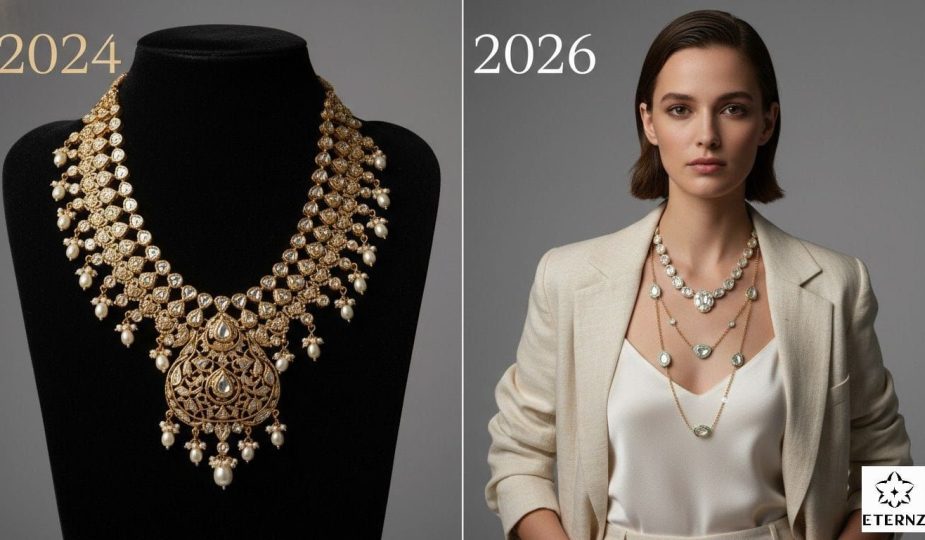
Aesthetically, 2026 favors bold, sculptural forms with mixed materials—think recycled gold paired with ceramic, titanium, and responsibly sourced stones. What sets this trend apart is the technology behind it: generative design tools and parametric modeling allow designers to create complex geometries that were previously impossible or prohibitively expensive to produce.
The result is a fusion of art and engineering, where computational design enables new levels of creativity while maintaining wearability and structural integrity.
7. AR and VR Shopping Experiences
Augmented and virtual reality are redefining how consumers discover and purchase jewelry. In 2026, AR try-on features are standard across leading e-commerce platforms, and VR showrooms offer immersive brand experiences for high-value pieces.
These technologies reduce friction in the buying process and build consumer confidence, particularly for online purchases where fit and scale are concerns. Brands leveraging AR and VR report stronger engagement metrics and higher average order values.
Conclusion
The jewelry trends defining 2026 are united by a common thread: technology in service of craftsmanship, transparency, and personalization. From AI-driven design tools and blockchain traceability to smart wearables and on-demand manufacturing, the brands that thrive will be those that embrace innovation without losing sight of the emotional and aesthetic value that makes jewelry timeless. For professionals in the tech and jewelry sectors, now is the time to invest in these capabilities and position for the next wave of growth.