
Building a versatile wardrobe is not about accumulating the most clothes—it is about owning the right clothes. For the modern man navigating both professional environments and personal pursuits, a curated capsule of essentials delivers maximum utility with minimum friction. Whether you are overhauling a cluttered closet or starting from scratch, the following guide outlines the foundational pieces that form the backbone of a dependable, year-round wardrobe.
Why a Curated Wardrobe Matters
A well-considered wardrobe is an investment in efficiency. When every item serves a distinct purpose and pairs effortlessly with the others, decision fatigue disappears and your personal presentation becomes consistent. The goal is interchangeability: every shirt should work with multiple trousers, and every jacket should layer over a range of outfits. The essentials below have been selected for their versatility, durability, and timeless design.
The Foundation: Tops
Quality T-Shirts
Plain, well-fitted t-shirts in neutral tones—white, black, grey, and navy—are the workhorses of any wardrobe. Prioritize 100% cotton or cotton-blend fabrics with a weight heavy enough to drape properly and hold its shape through repeated washing. Crew necks offer maximum versatility; a couple of V-necks can add variety for layering.
The Button-Down Shirt
Every man needs at least one crisp white button-down and one in a versatile shade such as light blue. These shirts transition seamlessly from the boardroom to dinner. An Oxford cloth button-down adds a slightly more relaxed option, while a darker dress shirt provides evening-ready formality.
The Polo and the Sweater
A fitted polo bridges casual and smart-casual dress codes with ease. For cooler months, a fine-gauge merino wool sweater—crew neck or V-neck—layers cleanly over shirts and under jackets. Merino offers warmth without bulk and resists odors, making it an excellent travel companion.
The Core: Bottoms
Dark Denim
A pair of dark, unwashed or minimally distressed jeans in a straight or slim-straight cut is among the most versatile garments a man can own. Avoid excessive fading, rips, or embellishment; the objective is a clean silhouette that can be dressed up with a blazer or down with a t-shirt.
Chinos and Dress Trousers
Chinos in khaki, navy, and olive provide a refined alternative to denim. A pair of tailored dress trousers in charcoal or navy completes the range, ensuring you are prepared for interviews, weddings, and formal engagements.
Shorts for Warmer Months
A tailored chino short in a neutral color, hitting just above the knee, is the standard for warm-weather dressing. Avoid overly long or excessively baggy cuts, which read as sloppy rather than relaxed.
Outerwear and Tailoring
The Blazer
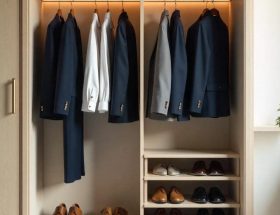
A navy blazer is the single most adaptable jacket in menswear. It elevates jeans and a t-shirt as readily as it complements dress trousers. Choose a medium-weight wool with a natural shoulder and a classic notch lapel—details that will remain appropriate for years.
The Everyday Jacket
A bomber, a field jacket, or a Harrington-style jacket covers casual outerwear needs. Select one in a neutral shade that complements your existing palette, and ensure the fit allows for layering without excess bulk.
The Overcoat
For cold climates, a wool overcoat in charcoal, navy, or camel provides both warmth and gravitas. A well-maintained overcoat is a long-term investment; prioritize fabric quality and construction over trend-driven details.
Footwear: Where Outfits Are Anchored
Footwear frequently determines whether an outfit succeeds. The essential rotation includes:
- White leather sneakers — clean, minimal, and compatible with almost everything casual
- Brown leather derbies or oxfords — the backbone of smart-casual and business attire
- Chelsea or lace-up boots — durable, seasonally flexible, and sharp with denim or chinos
- Black dress shoes — reserved for formal occasions and dark suits
Accessories and Finishing Details
Accessories should refine, not dominate. A leather belt that matches your shoe color, a simple stainless-steel or leather-strap watch, and a neutral wool scarf cover the essentials. Quality matters here: genuine leather and solid construction separate enduring accessories from disposable ones.
At-a-Glance Checklist
| Tops | Plain t-shirts, button-downs, polo, sweater | 6–10 pieces |
| Bottoms | Dark jeans, chinos, dress trousers, shorts | 4–6 pieces |
| Outerwear | Blazer, everyday jacket, overcoat | 3 pieces |
| Footwear | Sneakers, derbies, boots, dress shoes | 4 pairs |
| Accessories | Belt, watch, scarf | 3–5 pieces |
Prioritize Fit and Fabric
No list of essentials delivers results without attention to fit. A budget-friendly garment that fits impeccably will always outperform an expensive piece that does not. Establish your measurements, invest in minor tailoring where needed, and favor natural fabrics—cotton, wool, and linen—over synthetic blends that degrade quickly.
Conclusion
A disciplined wardrobe of essentials is not a limitation—it is a liberation. With the pieces outlined above, you can assemble outfits for virtually any occasion without second-guessing, overspending, or chasing trends. Start with the fundamentals, prioritize fit and fabric, and build deliberately. The result is a wardrobe that works as hard as you do and remains relevant season after season.